
Home PRODUCT/SERVICE Implant
Implant
Instructions for use
1. Product name: Dental implant fixture (grade 3)
2. Manufacturer's name and address
Company name: B&Medi Co., Ltd.
Address: (22339) 2nd floor, 56-33,
Chukhang-daero 296beon-gil, Jung-gu, Incheon
(21695) 3rd floor, 385, Ango-ga-ro, Namdong-gu, Incheon
TEL. 02-6295-0085 FAX. 02-6295-0086
3. Manufacturing license number: No. 4133
4. Packing unit: 1set/pkg
5. Expiration date: 5 years from the date of manufacture (until the date of label indication)
6. Storage method: Store in a dry cool and dark place at 1~30℃.
7. This product is “a disposable sterile medical device”
8. Reuse and re-sterilization are prohibited.
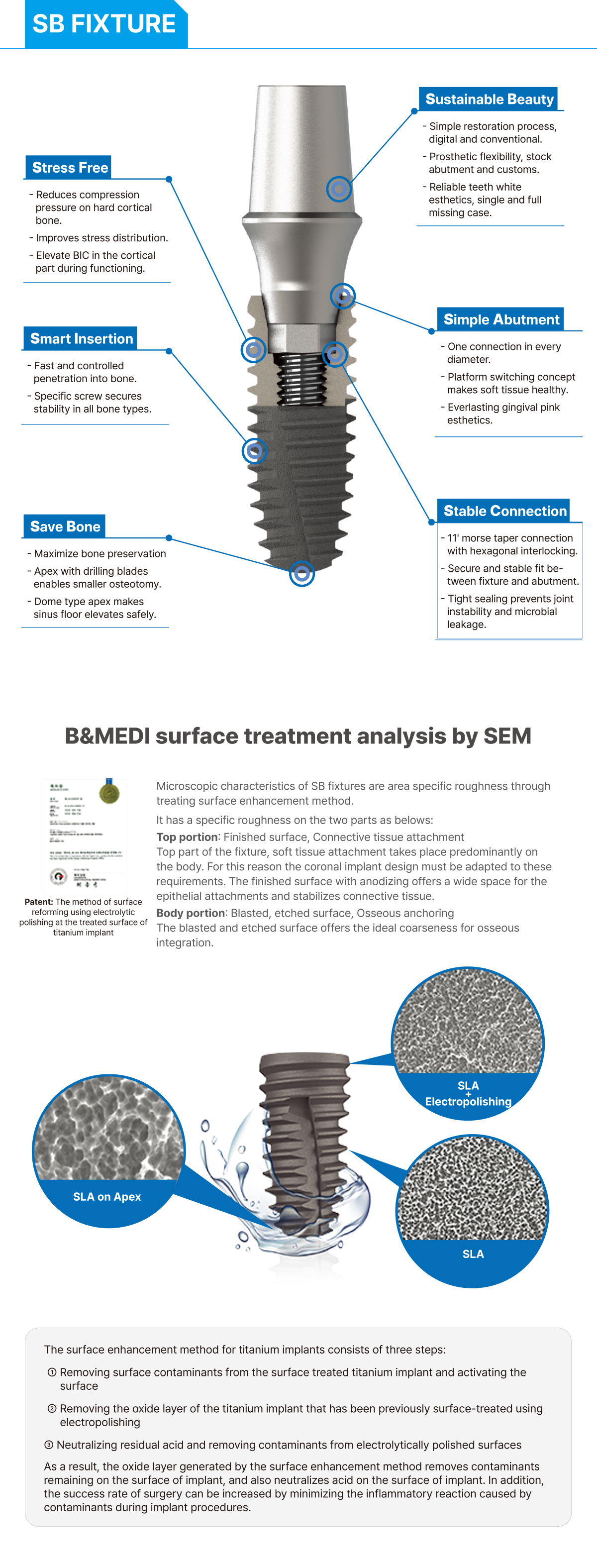
It is used to restore a missing tooth. In the dental field, it harmonizes with the biological mechanism of the oral masticatory system to relieve the occlusal load. It is used by inserting into the maxilla and mandible in the human body to support the The surgical instrument must only use its own product, and please check the label attached to the product for product code, specifications, manufacturing date, and expiration date.
2. Sterilization
This product is a disposable sterile medical device and must be used in a sterile environment using sterile surgical instruments. If the sealed packaging is torn or opened, it cannot be used. Unused products after opening cannot be re-sterilized or reused as there is a risk of contamination and infection and must be discarded.
3. Storage conditions
1) All products that are inserted into the oral cavity are disposable and should not be reused.
2) Discard the packaging of the used product.
3) After opening, discard it even if it is not used.
4) After the procedure is finished, the used surgical instruments are washed immediately after use with alcohol, detergent, distilled water, etc., and sterilized/dried before storage.
5) Avoid direct sunlight at room temperature (1~30°C) and store the product in a dry place.
4. Efficacy and effectiveness
It is used for restoration of masticatory function due to tooth loss and treatment that requires aesthetic consideration. It can be used for treatment that requires esthetic consideration in cases of edentulous and partial defects of the upper and lower jaw, support of dentures or bridges, and other indications.
5. General Precautions
- Only dentists who have completed implant surgery education and practice can use it.
- The operator should use the product after fully understanding the operation method and precautions for the product.
- The wear condition of the instrument must be checked before each procedure.
- Improper patient selection or procedure may cause implant failure.
6. Preparations before use
- Check the packaging of the product and check if the seal is torn or opened.
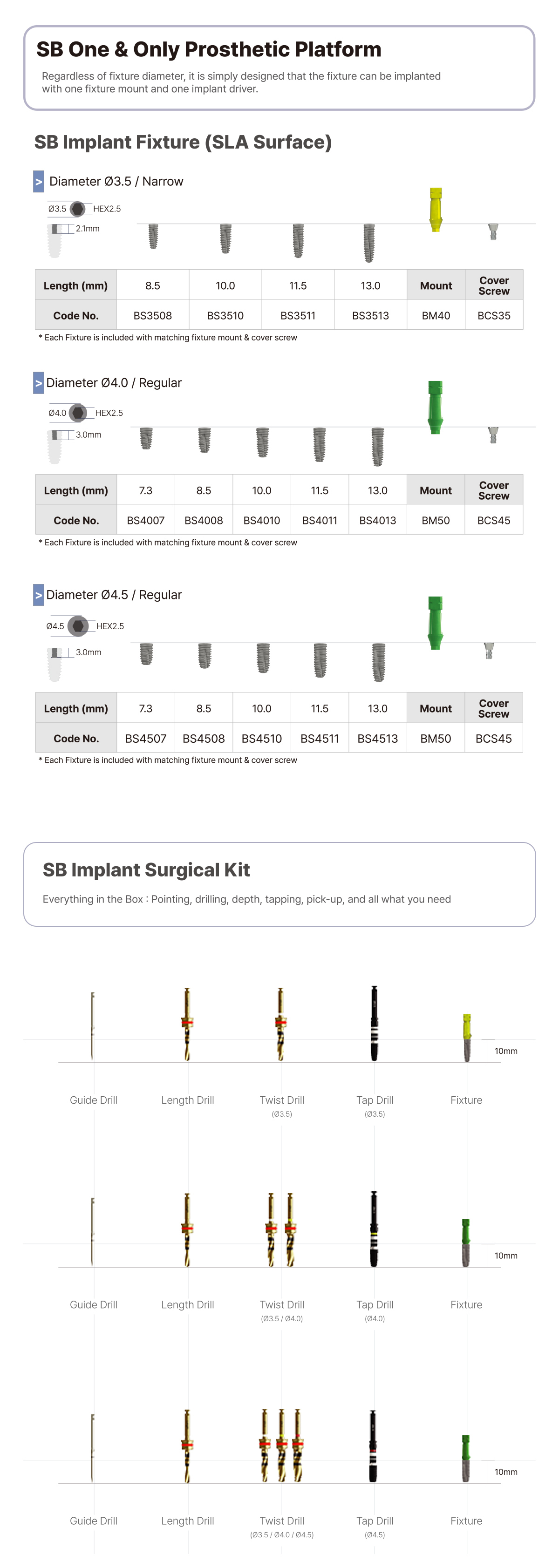
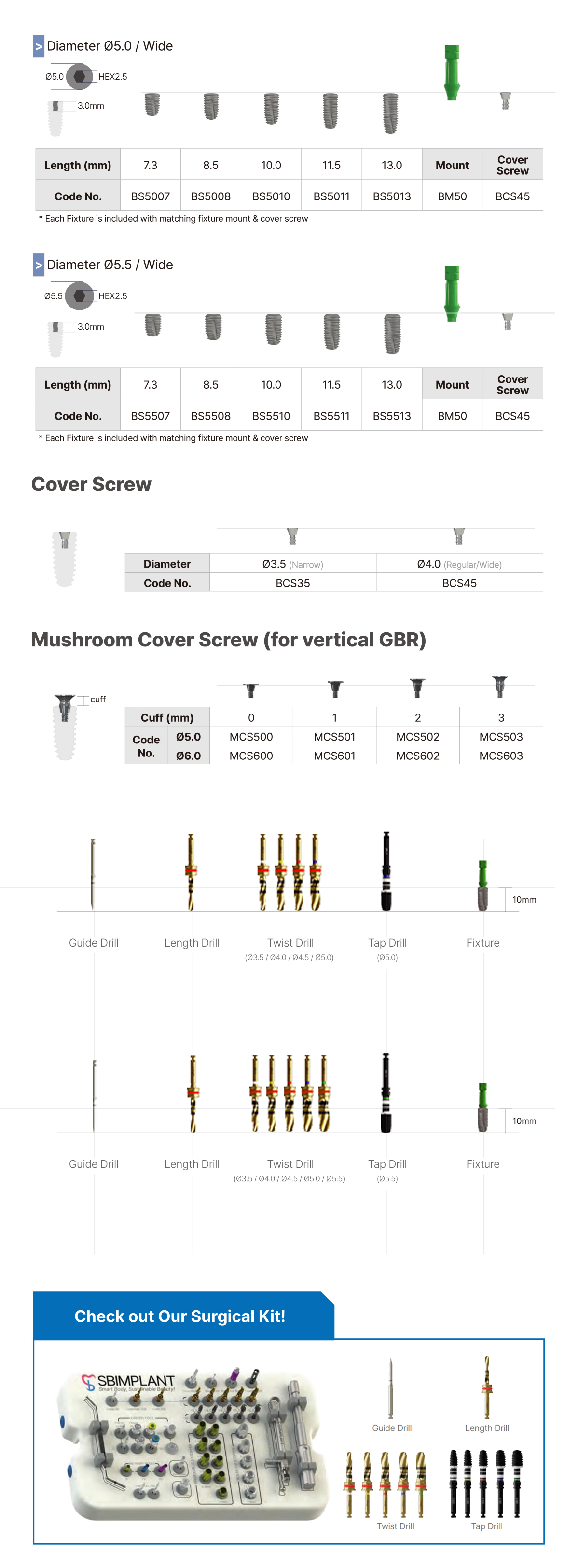
- Select a product with dimensions appropriate for the treatment plan.
- Check the exterior of the product for any blemishes or damage.
7. How to use
▣ pre-procedure planning
For successful implant treatment, each patient must be carefully evaluated from a medical and dental perspective. The implant procedure should be decided by considering the suitability of the bone and the appropriate procedure. An appropriate implant should be prepared in consideration of the expected situation and precautions. Excessive occlusal force may cause the implant to loosen or fracture. Clinical and radiological analysis and model analysis are essential prior to the procedure in order to check the basic information necessary for the procedure, the condition of teeth meshing, and the condition of the bones.
▣ How to operate
1) Fixture implantation
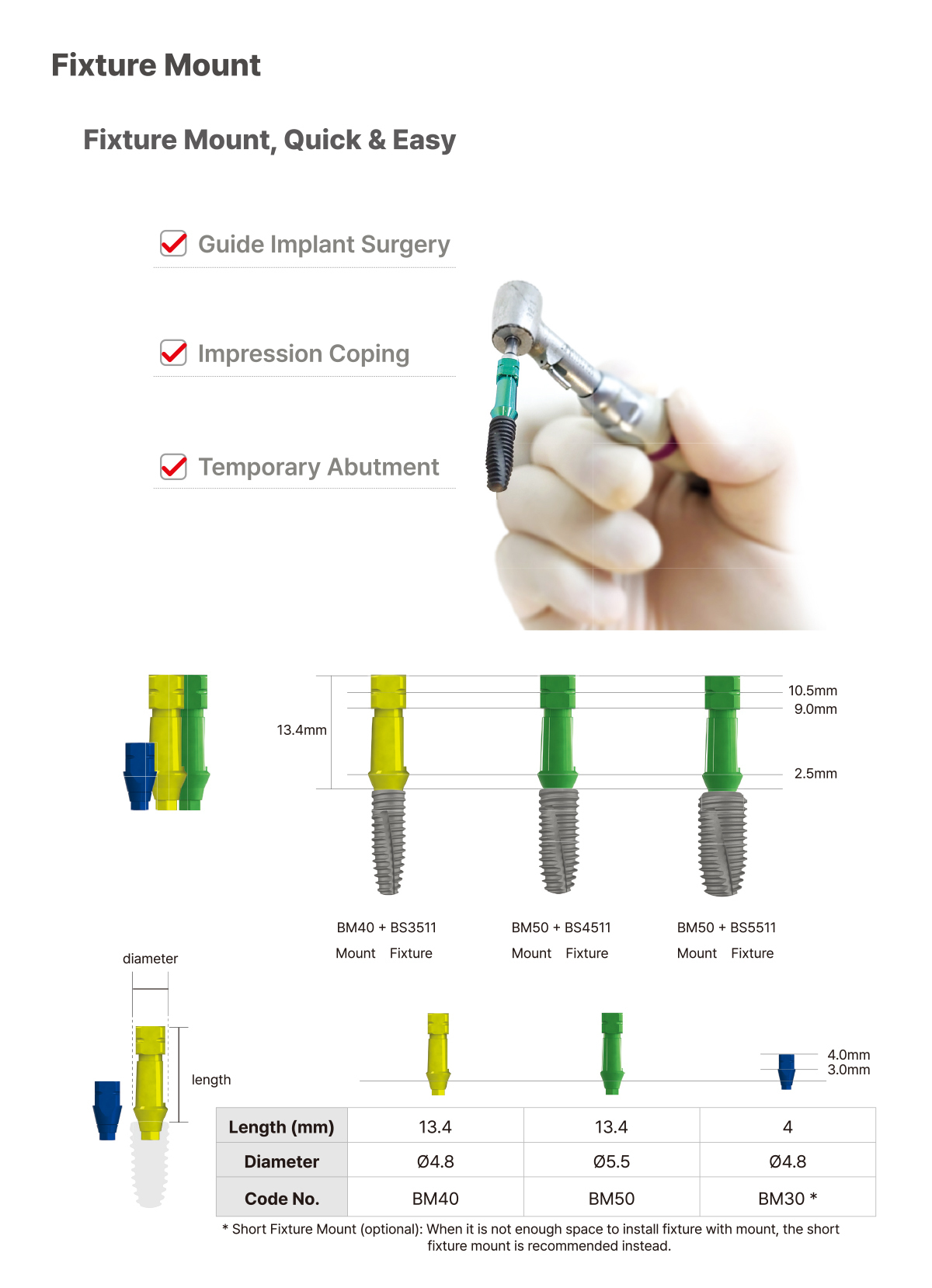
➀ Open the primary paper box and open the sterilized capsule inside the blister. The fixture is supplied with a pre-fastened mount to facilitate placement.
➁ Carefully place the fixture into the pre-made placement hole.
➂ Insert the fixture at 15~20rpm using a screwdriver for fixing. At this time, be careful not to apply excessive force and supply sufficient coolant to prevent damage to the bones due to heat. (recommended mounting torque 25N cm)
➃ After installing and fixing the fixture to the desired depth, remove the mount using a screwdriver.
➄ Using a screwdriver, tighten the cover screw at 20~50rpm.
2) upper prosthesis
➀ After the alveolar mucosa is healed and osseointegrated, the upper soft tissue is incised to expose the cover screw.
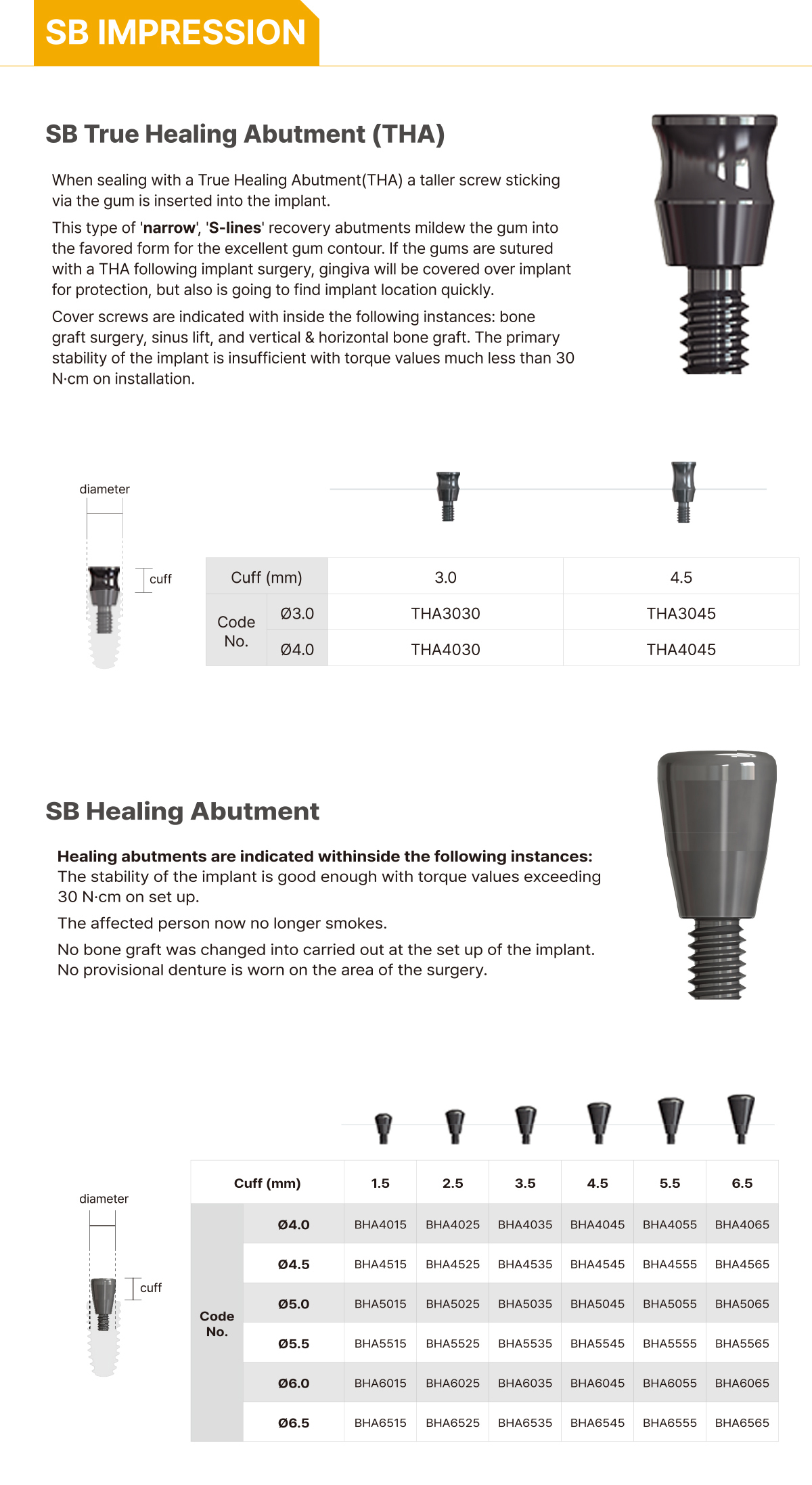
➁ After removing the cover screw by rotating it in reverse, fasten the healing abutment to the fixture.
➂ The soft tissue surrounding the Healing Abutment is sutured.
▣ Precautions for use
The surgical technique required for implant placement is a highly specialized and complex process, and professional training must be preceded for safe use. Improper patient selection and inadequate technique can cause implant failure or post-implant bone loss. In order to minimize damage to the patient's tissue, special attention should be paid to temperature rise and harsh surgical procedures and to removal of the source of contamination and infection. All drills and taps require continuous and sufficient watering for cooling. The implantation should be done at a very low speed (15-20rpm) or manually, and excessive torque (55N·cm) or more may have adverse effects such as partial fracture or necrosis of the bone.
If the implant is tilted more than 30°, it may cause implant fracture. Immediately after the procedure, no load should be applied to the implant, and the loading time should be determined in consideration of the patient's bone quality and the initial fixation force immediately after implantation. Implants with a diameter of 4.0 mm or less are prohibited for use in the posterior region of the oral cavity due to strength limitations. Since a lot of time is required for osseointegration, prosthesis should be performed after a sufficient healing period, and implantation and provision of prosthetic function should be avoided immediately after extraction.
8. Warning
Improper patient selection and procedure can lead to implant failure or loss of supporting bone. It must not be used for any other purpose, and must not be modified in any way. Implant agitation, bone loss, and chronic infection can lead to implant failure.
9. Indications
This product is designed for use in dental implant procedures. It is surgically placed on the upper/mandibular alveolar bone and after osseointegration with the alveolar bone, the missing tooth can be replaced by connecting the upper prosthesis. Diameter less than 4.0mm can be used in the anterior region, provides single or multiple restoration of function, and is designed for delayed loading. Also, depending on the bone quality after implant surgery, the healing period before connecting the abutment requires at least 3 months for the mandible and 6 months for the maxilla. If the bone is very soft, the healing period is 1 to 2 months longer, and then prosthetics are required. This medical device should be implanted in the alveolar bone and should be used in patients 18 years of age or older.
10. Contraindications
The procedure should be avoided in patients with contraindications, including:
- Patients with non-coagulation of blood or impaired bone and wound healing
- People with uncontrollable diabetes, heavy smokers or alcoholics
- Patients with weakened immune function due to chemotherapy and radiation therapy
- Patients with oral infection or inflammation (improper oral hygiene or bruising)
- Patients with incurable occlusal/joint disorders and insufficient arch space
- Patients who are not suitable for other surgeries
11. Safety of Magnetic Resonance (MR) Environment
This product has not been evaluated for safety and suitability in magnetic resonance (MR) environments. Tests for heat generation, movement, and image defects in a magnetic resonance environment have not been performed. Therefore, the safety of the product in a magnetic resonance environment is not known. Scanning a patient with this medical device inserted may cause damage to the patient.
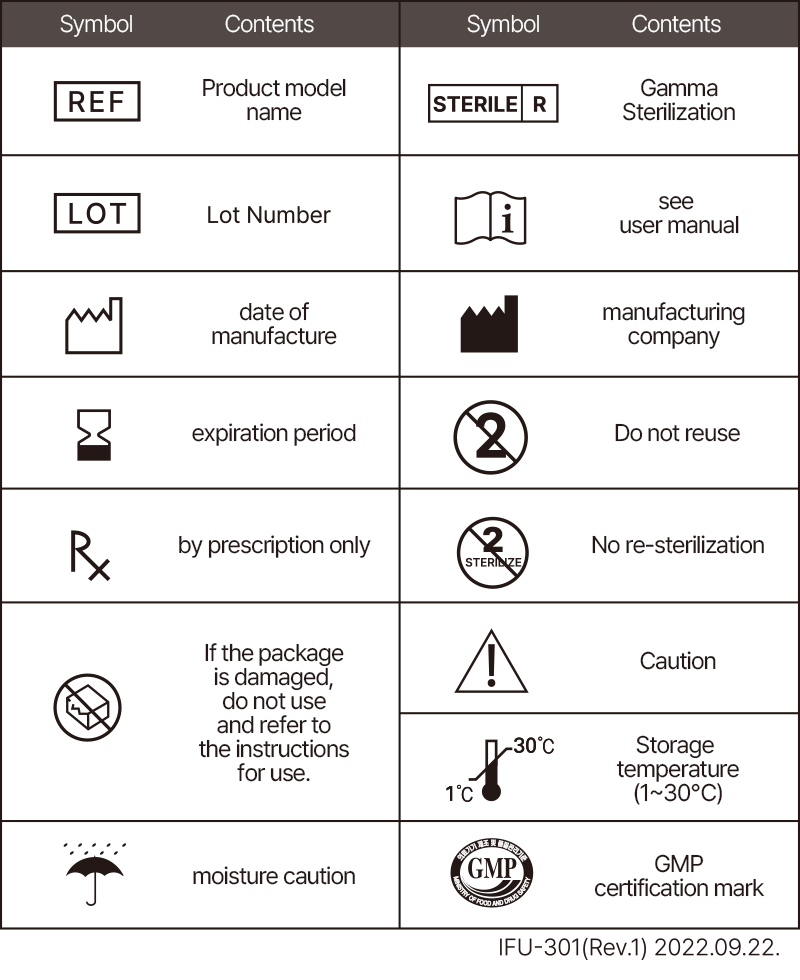
label symbol
![-Impression Coping: SB offers a range of impression coping components, providing a choice between analog or digital impression taking protocols. A wide variety of components are available for either open-mouth or closed-mouth type impression procedures, for all restoration type. When clinician choose analog, open moth impression procedure, either an open tray or closed tray technique is chosen by the doctor, they may then choose from a range of either analog or CAD/CAM components. Generally, pick up impression coping for open tray technique is highly precise procedures. In addition to the products available for these protocols, SB offers a wide variety of components which enable customization of parts for specific implant sites, whether wide or narrow, anterior or posterior. The design of these components enables flexibility and simple, accurate restoration planning for single tooth, bridge or a full denture. -Transfer Impression Coping (Closed Tray) -Pick-up Impression Coping (Open Tray) -Bite/Scan Impression Coping (Bite Tray) - Intra Oral Scan [Impression Coping Process] -SB Lab Analog](/thum_img/bnmedien/option/10168088186bd9860d2bf82c79494eb6_water__c1_w1200_h3292.jpg)
![-Bite Scan Abutment: Bite / Scan abutment devices and technology have substantially simplified the complex processes involved in the conventional procedure applied for restoration, and clinicians now express a greater preference for dual-bite impression or virtual devices due to their superior accuracy and simplification of the workflow. Able to obtain precise scan data through two library conformity groove. Enabling one healing scan body to control library conformity. Able to check the height of scan body through the number of groove on the occulusion. Carrier Holder: Carrier Holder fits exactly on the bite/scan abutment, and allows to transfer easily and prevents it from contaminants and dropping. [Bite Scan Abutment Work-Flows] Convensional Impression > Model Scan > Virtual Model > CAD > CAM. or Intra Oral Scan > Virtual Model > CAD > CAM.](/thum_img/bnmedien/option/4186fb9420dec5ed87b992325a79570f_water__c1_w1200_h2989.jpg)
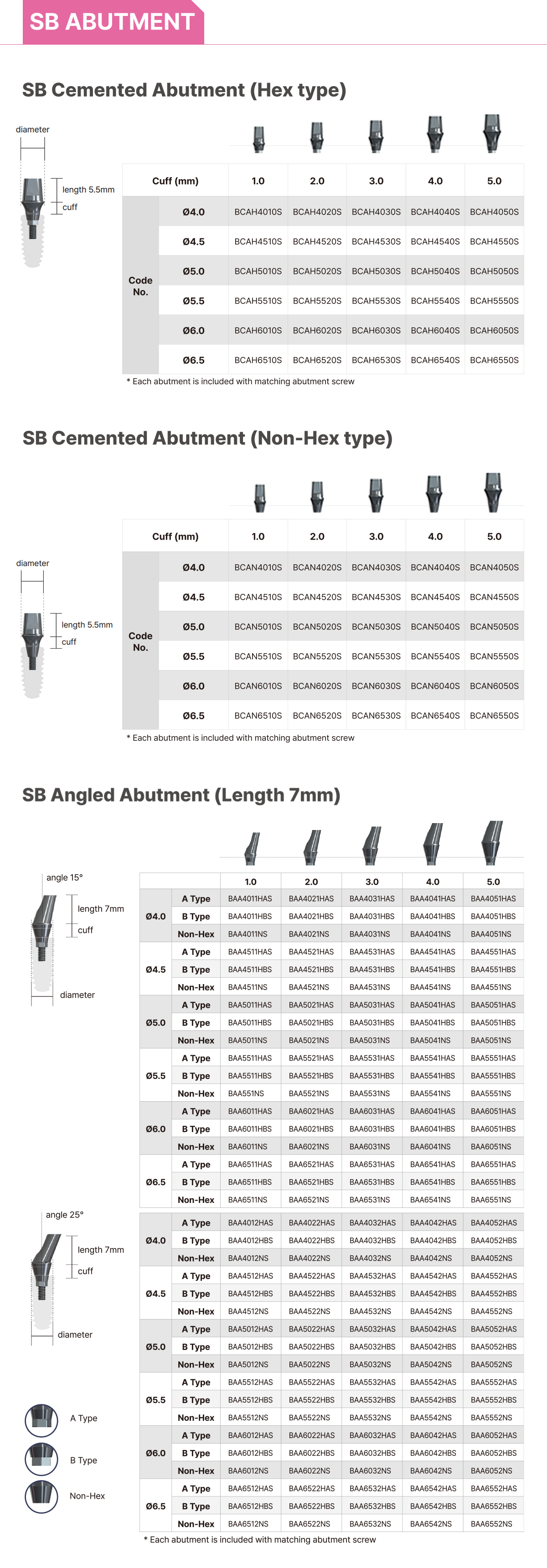
![-SB Multi Unit Abutment (MUA): In 2017 FDI announced 'PIDP'(Peri Implant Disease Project) to global awareness about peri implant disease. Almost every implant pathogenesis arose from fixture - abutment junction (FAJ) structure and location. SB developed several strategies about 'SB plan, Sustainable Body fixture plan'. SB MUA is one of SB sustainable protocols. SB MUA moves 'FAJ location' from subgingival 'deep' bone level to equigingival 'visible' soft tissue level. Also SB MUA converts 'FAJ structure' from internal 'weak' wall con- cept to external 'thick and strong' wall concept. Another advantage about SB MUA is inter-implant supra structure parallelism keeps easily and quickly whether sub-structure's relation is parallel or not. This characteristics are good for rehabilitating complete edentulous cases, so called 'All - on - X' modality. Multi Unit Abutment Straight (One Piece), Multi Unit Abutment Angled(17° / 30°), Multi Unit Angled Handle. [SB Multi Unit Abutment Work-Flow] Straight or Angled (17°/30°) > Scan Body > Lab Analog > Cylinder(4.5mm) AMC45 or Cylinder(6.5mm) AMC65 > Mini Screw AMCS. -SB Custom Abutment: Custom abutments can be privately fabricated for every patient easily, they can be fabricated with CAD/CAM milling technique in a very short time. The biggest problem with stock abutments was that tissue compatibility could have not been achieved easily, and the stock abutments are insufficient for the angulated implants. But custom abutments are unique and made for individual patients.](/thum_img/bnmedien/option/6058333c96edaa253fba48c35dc00a30_water__c1_w1200_h3783.jpg)
![Compatible with Various Implant Systems. -Fabricate Custom Abutment and Crown at the Same Time, Even Though Modelless Case Also -Perfect Fit with 1:1 Milled Crown -Modificable 1µm Offset fabrication tolerance: ±3µm -Medical Grade V Titanium Same as Fixture [Custom Abutment Work-Flow] -Analog: Coping(Transfer / Pick-up / Bite-Scan) > Conventional Impression > Lab Analog > Model Scan > Virtual Model > Library Titanium Blank Connection > CAD / CAM -Digital: Coping(Transfer / Pick-up / Bite-Scan) > Intra Oral Scan > Virtual Model > Library Titanium Blank Connection > CAD / CAM](/thum_img/bnmedien/option/5249f172c30418982aafd73852e340be_water__c1_w1200_h2995.jpg)